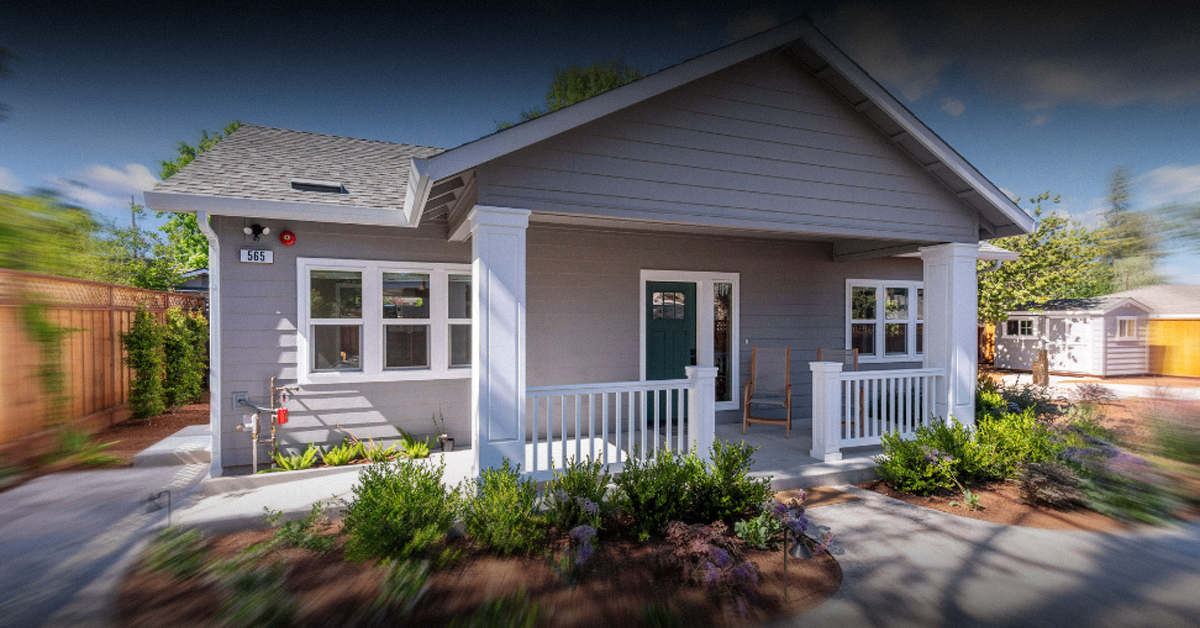
Can you build an accessory dwelling unit on a property in Houston? In most cases, yes. Houston allows ADUs up to 900 square feet on residential lots, but the real deciding factor is often the property’s deed restrictions, not the city code.
If you are shopping for a home or a lot with the goal of adding a backyard cottage, an in-law suite, or a rental unit down the road, you are not alone. More buyers across the Greater Houston area are looking at ADUs as a way to house family, generate rental income, or add long-term value to a property. But Houston does not work like most cities when it comes to figuring out what you can build. There is no citywide zoning map to check. Instead, you are working with a mix of city ordinances, private deed restrictions, and a few state rules layered on top.
Here is what that means for you if you are house hunting with an ADU in mind.
Houston Doesn’t Have Zoning, But It Does Have Rules
Houston is famous for having no traditional zoning ordinance. That does not mean anything goes. ADU development in Houston is governed by two overlapping sources: the Houston Code of Ordinances and private deed restrictions recorded against individual properties. In practice, the deed restriction is usually the bigger hurdle. City code tells you what is technically allowed. Your subdivision’s deed restrictions tell you what is actually allowed on your specific lot, and those restrictions can be more limiting than anything the city requires.
This is why two houses on the same street, one inside Houston city limits and one in a Fort Bend County subdivision like the ones Crimson Realty works in every day, can have completely different answers to the same ADU question. Always check the specific property, not just the general city rule.
The Basic Size and Design Rules
Within Houston city limits, here is what typically applies to a secondary dwelling unit:
- Houston caps ADUs at 900 square feet, and every unit must include a kitchen and a bathroom.
- Setbacks from the rear and side property lines must be at least 5 feet, increased from the previous 3-foot standard.
- The unit may be attached to the main house, such as a converted garage, or built as a separate detached structure.
- One dedicated off-street parking space is required for the ADU, separate from the two spaces already required for the primary residence.
Most ADUs built in Houston end up well under the maximum. Most ADUs in Houston fall between 500 and 600 square feet, since the kitchen and bathroom are typically the most expensive parts of the build. If you are budgeting for a project, that is a useful benchmark to start with rather than assuming you need to build all the way to 900 square feet.
Deed Restrictions Are the Real Gatekeeper
Houston does not currently impose a citywide owner-occupancy requirement for ADUs, which means you do not have to live on the property to legally rent the unit out. That is good news for investors. But it comes with a caveat you cannot skip: deed restrictions in some neighborhoods include their own owner-occupancy conditions, so you need to check your property’s specific restrictions before assuming you can rent freely.
If you are looking at a specific lot or house, you can request a copy of the deed restrictions before you write an offer. The Harris County Real Property Records Office can send you a copy of a property’s deed restrictions for a small fee, though there is no online portal for this, so it requires a phone call. For properties in Fort Bend County subdivisions, the same principle applies. Your HOA or subdivision’s recorded restrictions matter as much as, or more than, city code.
Two Things Buyers Often Overlook
Historic districts. If a property sits in one of Houston’s historic districts, an ADU has to be designed so it does not stand out from the street. The second dwelling generally needs to complement the architectural style of the primary home rather than overwhelm it, and there are 34 historic districts across the city to check against.
Flood zones and impervious cover. New construction, including an ADU, adds impervious cover to a lot, which can affect how water drains on the property. Given how much of the Greater Houston area sits in or near a flood zone, this is worth confirming with a site survey before you fall in love with a floor plan.
A State Law Worth Knowing About
Senate Bill 1412 limited local governments’ ability to restrict ADU development across Texas. Its practical effect on any individual Houston property still depends on how the city’s existing ordinances already lined up with the state’s intent, so it is not a blanket override of every local rule. If you are further along in a project, it is worth a conversation with your builder or a land use attorney about how the bill applies to your specific address.
Where to Start
The most useful first step for any buyer serious about an ADU is confirming feasibility before you get attached to a property. That means:
- Pulling the deed restrictions for the specific lot.
- Confirming whether the property falls inside Houston city limits or another Fort Bend County or Harris County jurisdiction, since the rules shift depending on which city or county reviews the permit.
- Checking flood zone status and any historic district overlay.
- Starting the conversation with the Houston Permitting Center, which handles building permit applications and related reviews.
FAQ
Do I have to live on the property to rent out an ADU in Houston? No. Houston does not currently impose a citywide owner-occupancy requirement for ADUs. Some neighborhood deed restrictions do require it, though, so check before you count on rental income.
How big can an ADU be in Houston? Houston caps ADUs at 900 square feet, though most homeowners build smaller, closer to 500 to 600 square feet, to keep costs down.
What stops most Houston ADU projects, city code or something else? Deed restrictions, more often than city code. Houston’s lack of zoning means the private restrictions recorded against your specific property are usually the deciding factor, not a citywide map.
If you are house hunting anywhere in Richmond, Rosenberg, Fort Bend County, or the Greater Houston area with an ADU or investment property in mind, I can help you find a lot or a home where the numbers and the restrictions actually work in your favor. Give me a call at 832-220-1461 or schedule a time that works for you: Click here
— Amanda Dockum, Owner and Managing Broker, Crimson Realty | Richmond, Texas