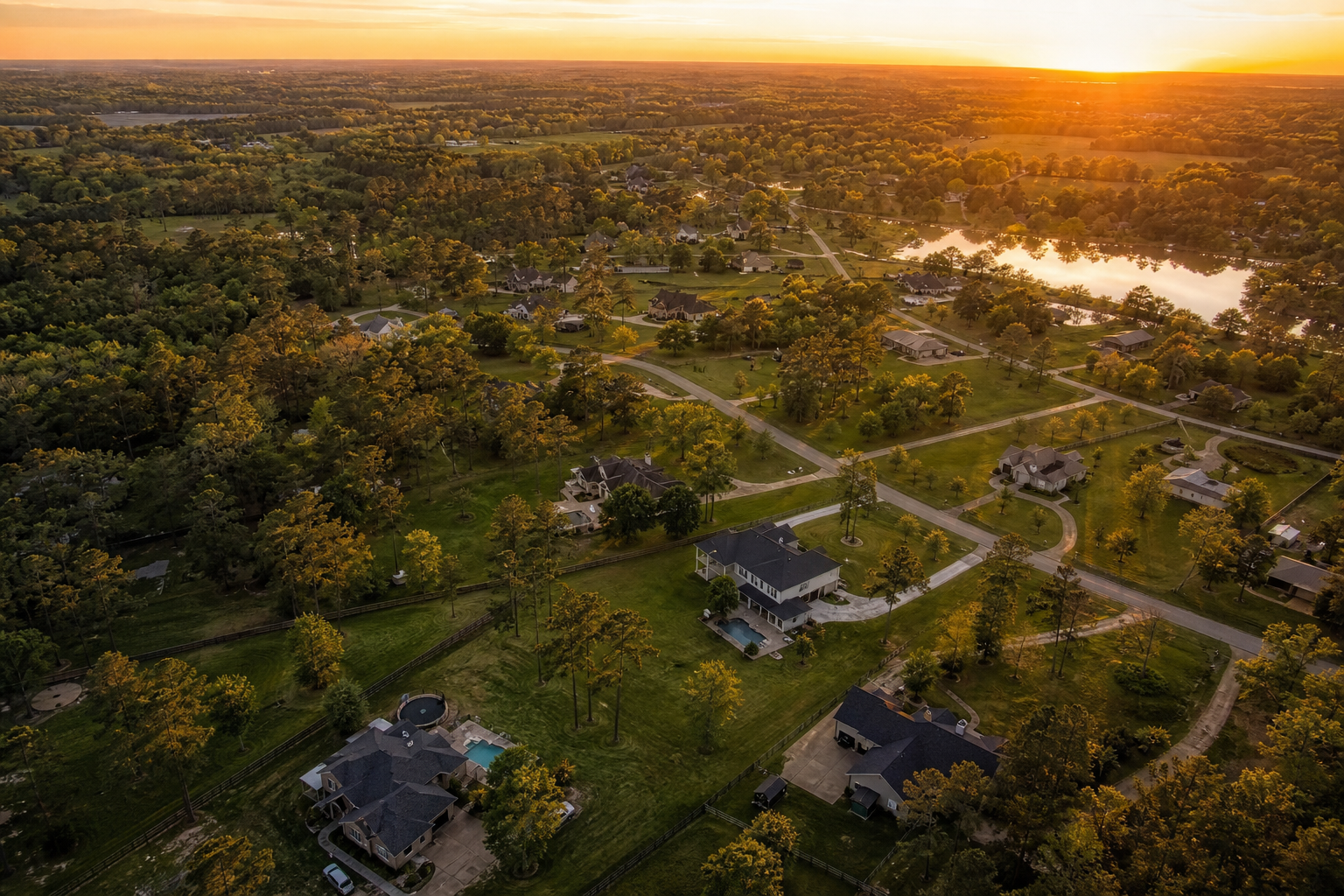
The Grand Parkway (SH 99) extension will give Rosenberg commuters a high-speed orbital route to Katy, the Energy Corridor, and Pearland without fighting Sugar Land traffic on US 59. Heavy construction is realistically a 2027–2030 event, with the new southern Fort Bend segments opening around 2030–2031.
How will the Grand Parkway extension change commutes from Rosenberg?
The Grand Parkway (SH 99) extension through Fort Bend County will give Rosenberg commuters a high-speed orbital route that bypasses the Sugar Land chokepoints on US 59/I-69, opening faster connections to Katy, the Energy Corridor, Pearland, and Clear Lake. Right-of-way acquisition is active now, heavy construction is realistically a 2027–2030 event for the southern Fort Bend segments, and a realistic road opening falls around 2030–2031.
Key Takeaways
Fort Bend County’s 2025–2028 Transportation Improvement Program allocates nearly $500 million across 15 projects, including construction of Grand Parkway Segment B and a new FM 1093/FM 359 four-lane tollway serving Richmond and Rosenberg.
Heavy construction on the southern Fort Bend Grand Parkway segments is realistically a 2027–2030 event, with a road opening around 2030–2031, according to the Grand Parkway Expansion Guide for Fort Bend.
Fort Bend County commissioners transferred governance of the new segments to TxDOT in May 2025, clearing a major hurdle and accelerating the path to construction.
An $83 million Texas 36 widening through Rosenberg and a new FM 1093/FM 359 tollway are companion projects that will improve north-south and east-west capacity even before the Grand Parkway extension opens.
Rosenberg commuters are already experiencing construction-related lane closures on SH 99 in Fort Bend County, a preview of the multi-year disruption that precedes long-term capacity gains.
What is actually being built, and when does it open near Rosenberg?
The Grand Parkway is not one project, it is a system of segments being built in phases across Greater Houston. TxDOT’s Grand Parkway system overview confirms the existing network is open to traffic as an integrated toll system, with new segments continuing to be layered onto it. For Rosenberg specifically, the relevant work is in the southern Fort Bend corridor.
Here is where things stand as of September 2026, and what comes next.
The funding picture
The Greater Houston Partnership reports that the Houston-Galveston Area Council’s 2025–2028 Transportation Improvement Program allocates nearly $500 million to Fort Bend County across 15 transportation projects. That package includes construction of Grand Parkway Segment B, a new four-lane tollway along FM 1093/FM 359 connecting Richmond and Rosenberg into the broader SH 99 network, and an $83 million Texas 36 widening through Rosenberg from two to four lanes. These are companion investments, not isolated line items, they are designed to work together.
For a deeper look at how this investment landscape connects to Fort Bend real estate, I put together a full breakdown in my post on Grand Parkway Expansion: Fort Bend Commute and Home Values.
The construction timeline, phase by phase
The Grand Parkway Expansion Guide for Fort Bend is the clearest public source on what happens when. Here is the honest sequence:
Right-of-way acquisition (active now through mid-2020s): Property owners near the planned alignment are receiving offers from TxDOT. You may see survey crews, utility-location teams, and early clearing activity, but not full-scale earthmoving yet. This is also the phase when speculative land activity tends to pick up along frontage corridors.
Utility relocation and early site work (late 2020s): Power lines, pipelines, and telecom infrastructure get shifted out of the roadway footprint. Expect intermittent lane closures on existing roads, similar to the right-lane and turn-lane closures Fort Bend County Toll Road Authority reported in September 2026 on SH 99 near Peek Road and West Bellfort. Noise and truck traffic increase, but major bridge structures are not yet visible.
Heavy construction, paving, bridges, ramps (2027–2030): This is the phase that transforms the corridor. Grading, overpasses, and interchanges go in stages. Neighborhoods near major interchanges, particularly where SH 99 will meet US 59/I-69 or Hwy 90A, should anticipate continuous construction noise, detours, and expanded night work windows.
Realistic opening: around 2030–2031 for the southern Fort Bend segments, per the expansion guide.
Fort Bend County commissioners transferred governance of these segments to TxDOT in May 2025, which cleared a significant governance hurdle and put the project on a cleaner path to construction. The most recent Fort Bend County Precinct 1 mobility status report lists TxDOT letting dates of December 2025 and August/September 2026 for related Grand Parkway projects in the county’s fiscal year 2026 program, a letting date is the formal bid and contract award step, not the ribbon cutting.
For context on how long these projects take once construction begins: FHWA’s project profile for Grand Parkway Segments H and I shows construction began in July 2018 and reached substantial completion in February 2022, roughly 3.5 years for segments that cost approximately $400 million in 2018 dollars. The southern Fort Bend work is a comparable undertaking.
Phase Estimated Window What Rosenberg Residents Will Notice Right-of-way acquisition Active now through mid-2020s Survey crews, property offers near alignment, early land clearing Utility relocation and site prep Late 2020s Lane closures on existing roads, increased truck traffic, service disruptions Heavy construction 2027–2030 Continuous noise, detours, night work near interchanges Road opening (southern Fort Bend segments) Around 2030–2031 New orbital access to Katy, Energy Corridor, Pearland, and Clear Lake
How will the extension actually change your commute?
Right now, Rosenberg commuters have a few main options, and none of them are great at peak hours. US 59/I-69 through Sugar Land is the workhorse route to central Houston, the Medical Center, and Greenway/Westchase. Getting to the Energy Corridor or Katy typically means riding 59 to Beltway 8 and fighting I-10 from the east. Within Fort Bend County, Hwy 90A and Texas 36 handle a lot of local traffic.
The Grand Parkway extension changes that geometry. Once the southern Fort Bend segments are open, Rosenberg drivers will have a high-speed orbital option that lets them swing north or east without threading through Sugar Land at all. The most meaningful gains will look something like this:
Rosenberg to Katy and the Energy Corridor: Instead of taking 59 northeast and cutting across on Beltway 8 or Westpark, you take SH 99 north and connect to I-10 west of the city. That route bypasses a significant portion of the Sugar Land and Westheimer congestion that currently adds unpredictable time to the trip.
Rosenberg to Pearland, Friendswood, and Clear Lake: The orbital nature of Grand Parkway means you can eventually connect south and east without touching Downtown or the inner loop at all.
Reliability over raw minutes: This is the honest answer I give every client who asks how much time they will save. The bigger win from Grand Parkway is not always shaving 20 minutes off your drive, it is having a predictable alternative when a crash shuts down US 59. Drivers on already-open Grand Parkway segments consistently report more consistent travel times compared with inner freeway routes, especially during peak hours.
The regional strategy behind all of this is broader than one road. In an April 2025 public meeting, H-GAC presented transit route options along the Hwy 90A corridor that explicitly include Rosenberg, one option runs from the Fannin South Transit Center all the way to Rosenberg, and the long-range plan pairs that transit investment with future Grand Parkway and Fort Bend Parkway extensions. For commuters who prefer park-and-ride or bus rapid transit over driving, that is a meaningful additional option on the horizon.
Meanwhile, the Texas 36 widening and the new FM 1093/FM 359 tollway will improve local capacity even before the Grand Parkway extension opens. Texas 36 going from two to four lanes through Rosenberg addresses a bottleneck that affects daily trips to Richmond, Needville, and points south. The FM 1093/FM 359 tollway creates a new east-west connection that feeds directly into the SH 99 and Fort Bend Parkway network.
For buyers already thinking about where to land in this corridor, I have a full rundown of the new master-planned communities in Richmond and Rosenberg that are being positioned around exactly these access improvements.
What does this mean for home values and buying decisions in Rosenberg?
The short answer: proximity to infrastructure like this matters, but the details of that proximity matter just as much as the fact of it.
Looking at how Grand Parkway openings have played out in areas like Katy, Cypress, and Spring, a few patterns show up consistently. Homes with direct, convenient access to an on-ramp, meaning a short surface-street drive, not a U-turn through a construction detour, tend to attract more buyer competition from commuters who value predictable drive times. That demand can translate into stronger relative pricing compared with otherwise similar homes farther from access points.
At the same time, immediate frontage-road parcels near major interchanges often shift toward commercial and mixed-use development over time. Gas stations, medical offices, and retail follow the traffic. That is good for the broader area’s amenity base, but it can change the residential character of streets that are right on the corridor. Buyers who want the commute benefit without the noise and commercial activity typically find the sweet spot one or two blocks off the main alignment.
Homes that back directly onto a tollway do face real trade-offs. Sound walls help, but they do not eliminate noise or visual exposure. I always walk buyers through that honestly, the commute math might pencil out beautifully, but if the backyard situation is going to bother you in year three, that matters for resale too.
The bigger picture for Rosenberg is that the combination of Grand Parkway, the FM 1093/FM 359 tollway, Texas 36 widening, and the Hwy 90A transit study positions the city as a genuinely connected Fort Bend hub rather than the end of the line on US 59. That shift in perception tends to attract buyers who work in multiple outer-ring job centers, Katy, Sugar Land, Pearland, and want a central Fort Bend location with route flexibility. That is a growing buyer profile, and Rosenberg is increasingly well-positioned for it.
Your specific situation, which neighborhood, how close to the planned corridor, what your commute destination is, determines how much of this upside actually applies to you. That is exactly the kind of analysis I work through with buyers before we start touring. If you want to see what is already being built in the area, the new developments in Rosenberg post is a good starting point.
Frequently Asked Questions
What is the realistic timeline for the Grand Parkway extension near Rosenberg to open?
Heavy construction on the southern Fort Bend segments is realistically a 2027–2030 event, with a road opening around 2030–2031, according to the Grand Parkway Expansion Guide for Fort Bend. Right-of-way acquisition is active now, and TxDOT letting dates for related Fort Bend projects are scheduled for late 2025 and 2026, those are bid and contract award milestones, not construction start dates. Fort Bend County transferred governance of the new segments to TxDOT in May 2025, which cleared a major hurdle and keeps the project on track.
Will the Grand Parkway extension make it easier to get from Rosenberg to Katy and the Energy Corridor?
Yes, that is one of the most direct commute benefits once the extension opens. Currently, Rosenberg to Katy or the Energy Corridor means taking US 59/I-69 northeast through Sugar Land and then cutting west on Beltway 8 or Westpark toward I-10, which stacks two congested corridors. A direct SH 99 connection lets you take the orbital route north and meet I-10 west of the city, bypassing much of that Sugar Land and Westheimer traffic. The gain is as much about reliability and having an alternative route as it is about raw minutes.
Is the Grand Parkway expansion going to increase property values in Rosenberg, or is most of the price jump already baked in?
Infrastructure announcements do tend to move buyer interest before a road opens, that pattern showed up in Katy, Cypress, and Spring as Grand Parkway segments were built there. Whether the appreciation has already been priced in depends on the specific neighborhood and how close it sits to planned access points. Homes with convenient on-ramp access typically see stronger relative demand; homes directly on the frontage road face commercial-development trade-offs that can cut the other way. The only way to know where a specific property sits in that picture is to run a current market analysis, which I am happy to do.
How much construction disruption should Rosenberg neighborhoods expect before the road opens?
Residents are already seeing a preview of it. The Fort Bend County Toll Road Authority’s September 2026 construction updates show active right-lane and turn-lane closures on SH 99 frontage roads near Peek Road and West Bellfort. As the project moves into heavy construction (2027–2030), neighborhoods near planned interchanges, particularly where SH 99 meets US 59/I-69 or Hwy 90A, should expect continuous noise, detours, and night work windows. The disruption is real, but it is finite, and the capacity gains on the other side are significant.
Will there be new park-and-ride or transit options tied to the Grand Parkway plans for Rosenberg?
Possibly, and it is worth watching. In an April 2025 public meeting, H-GAC presented transit route options along the Hwy 90A corridor that explicitly include Rosenberg, one route runs from the Fannin South Transit Center all the way to Rosenberg, and the long-range plan pairs transit with future Grand Parkway extensions. Nothing is funded or scheduled yet, but Rosenberg is inside the study area, and regional planners are treating transit and road capacity as complementary parts of the same southwest corridor solution.
The Grand Parkway extension is a genuine long-term win for Rosenberg commuters, but the timeline is a 2027–2031 story, not a 2026 one. If you are buying now and want to position yourself for that upside, the neighborhood and corridor you choose today matters a lot. Call me at 832-220-1461 or schedule a consultation and I will walk you through exactly where the access points are planned, which neighborhoods sit in the sweet spot, and what the commute math actually looks like for your situation. You can also request a market price opinion if you already own in Rosenberg and want to understand how this infrastructure story is showing up in your home’s value today.
Equal Housing Opportunity. This article is general information only and does not constitute legal, tax, or financial advice. Confirm your specific numbers with your title company, tax advisor, or lender. Real estate licensees in Texas are regulated by the Texas Real Estate Commission (TREC).