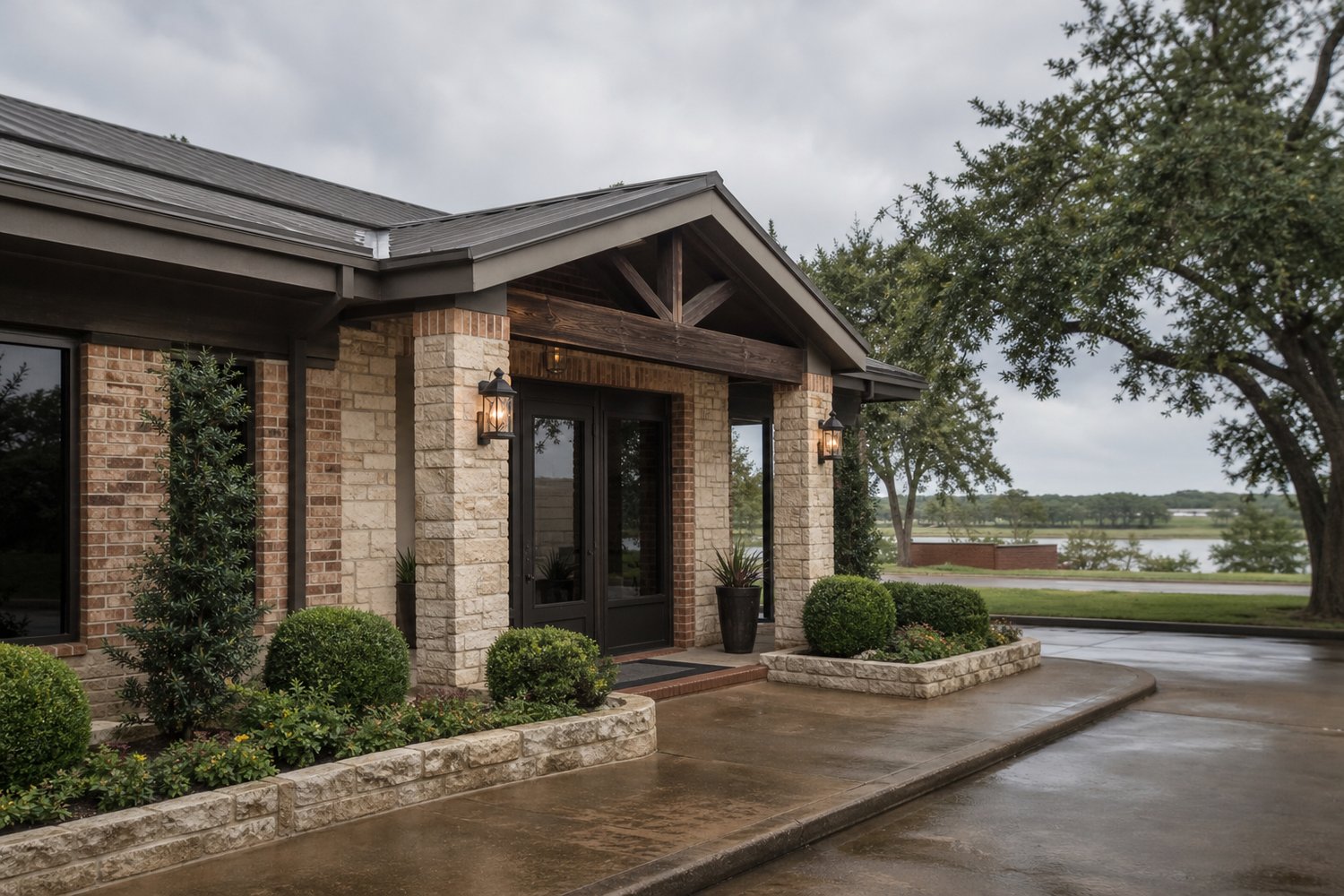
Start with your lender’s approval, then rebuild the payment yourself for each address you’re considering. Add the property-tax escrow, MUD charges, homeowners and any flood insurance, HOA dues, and a maintenance reserve. The monthly total you can live with comfortably, not the approval ceiling, sets your real price range.
How Much House Can You Afford in Greater Houston After Taxes and MUD Costs?
Your real budget in Greater Houston After Taxes, insurance, and MUD charges is the monthly payment you can carry comfortably at one specific address, and it is often lower than your lender’s approval. An approval is built on your income, debts, and credit. It doesn’t know your utility bills, your upkeep, or how the taxing districts at one address compare to another. Two homes at the same price can land hundreds of dollars apart each month, so you have to rebuild the payment home by home.
Key Takeaways
- Greater Houston’s median single-family price was $325,000 in September 2026, but two homes near that price can carry very different tax bills because each address sits in its own set of taxing jurisdictions.
- September 2026 showed 40,192 active single-family listings, 5.5 months of inventory, and 58 average days on market, which gives you room to compare the all-in monthly cost of several addresses before you commit.
- MUD charges are district-specific, with no single Greater Houston-wide rate, so you have to confirm the exact district and its rate for every home on your list.
- Texas school districts must provide a $140,000 residence-homestead exemption on a qualifying primary residence, but the 10% appraisal cap only starts on January 1 of the tax year after you first qualify.
- The seller’s capped value and exemptions don’t carry over to you, so the seller’s tax bill is a starting point, not your future payment.
Is a lender’s approval the same as what you can comfortably afford?
No. An approval tells you the most a lender is willing to lend based on your qualifying income, debts, credit, down payment, and loan terms. Your comfortable budget is a different number, and it’s usually lower.
The most common first-time-buyer mistake I see is house hunting before having the lender conversation, because knowing your true ceiling changes everything. But I’d add a second step: once you have that ceiling, treat it as the top of your range, not the target.
Here’s what an approval often doesn’t capture, and what your own budget should:
- Utilities, which can run differently in a larger or older home
- Maintenance and repairs, which show up irregularly and rarely on a schedule
- Commuting costs, which change depending on which side of the metro you pick
- Savings goals and the cushion you want to keep after closing
A lender’s approval can also blur address-level differences. Until you’ve chosen a home, nobody can tell you exactly how its county, city, school district, and MUD charges will shape your payment.
What does the Greater Houston market look like right now for buyers?
The most recent figures I have are from September 2026, not October. According to the Houston Association of REALTORS®, the median single-family price was $325,000, and 7,030 single-family homes closed. HAR’s monthly market report also shows the supply and pace for that month.
| Greater Houston single-family metric | September 2026 |
|---|---|
| Median sale price | $325,000 |
| Average sale price | $421,311 |
| Homes closed | 7,030 |
| Active listings | 40,192 |
| Months of inventory | 5.5 |
| Average days on market | 58 |
Those are metro-wide numbers. They tell you the market gives you time to compare, but they can’t tell you what a specific home will cost you each month. That depends on the address.
Why do property taxes and MUD costs change the payment from one address to the next?
Because every address sits inside its own stack of taxing jurisdictions, and each one adds to the bill. Two homes with the same price can have very different total tax burdens.
What makes up the tax bill on a Houston-area home?
The Harris County Tax Office lists county, city, school-district, municipal-utility-district, and other jurisdictional rates separately. That’s the point: there’s no single Houston rate. Depending on where you buy, your bill may combine Harris, Fort Bend, or Montgomery County taxes with a city, a school district, a MUD, and other special districts.
The City of Houston’s 2026 tax-rate information is built from certified tax-roll data from the Harris, Fort Bend, and Montgomery Central Appraisal Districts. That tells you the right approach is to check the real jurisdictions for the property, not use a citywide guess.
What is a MUD, and how does it hit your budget?
A MUD, or municipal utility district, is a local district that serves an address, and its charges can show up as a property-tax rate, utility billing, or both. There is no one rate. Per the Harris County Tax Office’s jurisdiction rate page, the applicable district and rate have to be verified through the county tax office, the appraisal district, or the district’s own records.
When I’m working with buyers on new construction and master-planned communities, MUD questions come up often. Here’s what I ask on every home:
- Is the home inside a MUD at all?
- Which district is it, and what are its current rate and charges?
- Does the listing’s tax estimate include every jurisdiction, or only some of them?
Listing estimates can be built on a prior owner’s bill or an older tax year, so don’t treat them as final. Tax rates and appraised values can change annually.
How do the homestead exemption and the appraisal cap work for a buyer?
The homestead exemption helps on a qualifying primary residence, but it isn’t automatic, and the cap doesn’t start right away. Under the Texas Comptroller’s exemption rules, school districts must provide a $140,000 residence-homestead exemption, which reduces the taxable value the school district uses. You claim it through the county appraisal district.
Other taxing units may adopt an additional local-option exemption of up to 20% of appraised value. Whether one applies to you depends on the county, city, school district, and any special district covering the property.
Then there’s the cap. Texas generally limits the annual increase in appraised value on a qualifying homestead to 10%, excluding new improvements, according to the Comptroller’s property valuation guidance. It takes effect on January 1 of the tax year after you first qualify for the homestead exemption. So it doesn’t protect you in the year you buy.
The limitation also only applies to property receiving a homestead exemption, and it ends when the owner no longer qualifies. Don’t assume the seller’s capped value will carry over to you. I recommend modeling your taxes from your likely taxable value after the sale, not from the seller’s current bill. If you’re looking at Fort Bend County specifically, my post on Fort Bend property tax changes homeowners need to know goes deeper on that county.
How do you work out your Greater Houston After Taxes number for a specific home?
Build the monthly payment line by line for each address, then compare that total to what you’re comfortable spending. I call that your Greater Houston After Taxes number. Don’t treat principal and interest as your all-in housing cost, because it’s only one line.
Here’s the worksheet I use with my clients:
| Monthly line item | What drives it | Where to verify it |
|---|---|---|
| Principal and interest | Loan amount, rate, term, down payment | Your lender |
| Property-tax escrow | Your likely taxable value, exemptions, every taxing jurisdiction | County tax office and appraisal district |
| MUD-related costs | The specific district’s tax rate and/or utility charges | County tax office, appraisal district, or district records |
| Homeowners insurance | Home age, construction, location, coverage | An insurance quote on that address |
| Flood insurance, if applicable | Flood exposure and lender requirements for that property | An insurance quote on that address |
| HOA dues | The community and what its dues cover | Listing documents and the HOA |
| Maintenance reserve | Home age, condition, and systems | Your own inspection and budget |
What steps should you follow to compare addresses?
- Get your lender’s ceiling first so you know your outer limit.
- Decide your own comfortable monthly number before you look at listings, including utilities, upkeep, commuting, and savings.
- Pull the exact address’s jurisdictions. Confirm the county, city, school district, MUD status, and any other special districts.
- Use certified tax information for the current tax year, not an older listing estimate or the prior owner’s escrow payment.
- Recalculate taxes from your expected post-sale value with the exemptions you’ll actually qualify for.
- Get insurance quotes on the address, including flood coverage if it applies.
- Add it all up and compare it to your comfortable number.
Geography matters too. If you’re weighing central Houston against suburbs in northwest Harris County, Fort Bend County, or Montgomery County, check the school district, municipal jurisdiction, MUD status, flood exposure, and insurance requirements before comparing payments. My post on 7 questions to ask before buying a home in Fort Bend County covers more of that checklist.
If your budget is tight, there are ways to ease the payment itself, such as down payment assistance programs in Texas or builder incentives and rate buydowns on new construction. Which one fits depends on your situation and the address.
Your exact numbers depend on the home, its districts, and your own finances, and that’s where a side-by-side review with someone who knows this market pays off. It’s exactly the kind of math I walk my clients through before we write an offer.
FAQ
How much house can I afford in Houston after property taxes and homeowners insurance?
You can afford the home whose full monthly payment fits your comfortable budget, which is often less than your lender’s approval. Add principal and interest, property-tax escrow, homeowners insurance, flood insurance if it applies, HOA dues, MUD-related costs, and a maintenance reserve for each address. Then compare the total to the monthly number you’ve set for yourself.
How do MUD taxes affect my monthly payment in the Houston suburbs?
A MUD can raise your monthly cost through a property-tax rate, utility billing, or both. The charges depend on the specific district serving the address, so there’s no metro-wide rate. You can verify the district and its rates through the Harris County Tax Office jurisdiction rate page, the appraisal district, or the district’s records, and I’d confirm the listing’s tax estimate includes it.
Why is the property-tax estimate on one Houston listing much higher than on another?
The two homes likely sit in different combinations of taxing jurisdictions. The county, city, school district, MUD, and other special districts each add their own rate, and appraised values and exemptions differ too. A listing estimate may also reflect a prior owner’s bill or an older tax year, so verify it against current certified information.
Does the Texas homestead exemption reduce my first-year property taxes?
The exemption applies to your qualifying primary residence, and you claim it through the county appraisal district. School districts must provide a $140,000 residence-homestead exemption, and other taxing units may offer more. The 10% appraisal cap is a separate protection that starts on January 1 of the tax year after you first qualify, so don’t count on it in your first year.
Will the seller’s capped appraisal value transfer to me when I buy a Houston home?
No, you shouldn’t assume it will. The appraisal limitation applies only to property receiving a residence-homestead exemption and ends when the owner no longer qualifies. Estimate your taxes from your likely taxable value after the purchase, not from the seller’s current bill.
What should you do before you fall for a home?
Know your Greater Houston After Taxes number before you start touring, then test every address against it. A lender’s approval sets your ceiling, but taxes, MUD charges, insurance, and upkeep decide whether a home actually feels comfortable month to month. I’d rather you run the numbers with me before you’re emotionally attached than after.
If you’d like to walk through your budget and the specific addresses on your list, schedule a consultation with me or call 832-220-1461. If you’re a homeowner thinking about your own next move, you can also get a market price opinion.
About Amanda Dockum
Amanda Dockum is the Managing Broker of Crimson Realty, serving the Greater Houston area with a focus on Fort Bend, Montgomery, and Harris Counties. She and her team help first-time buyers and first-time sellers navigate the real estate process with confidence, with deep expertise in master-planned communities across Magnolia, Richmond, and Rosenberg, TX.
Crimson Realty · 832-220-1461
Equal Housing Opportunity. License info: Not required on advertising in Texas. Regulated by the Texas Real Estate Commission (TREC). This article is general information, not legal, tax, or financial advice. Confirm your own numbers with your title company, tax advisor, or lender.